
Award-winning Web
App Agency, Dubai
Web Applications Design & Development
At Tequila, we design and develop custom web applications that don’t just represent your business — they run it, with systems designed to streamline operations.

Applications Built for Real Operations
Web applications today are not projects. They are business systems.
At Tequila, we build custom web applications for companies that have outgrown spreadsheets, generic tools, and disconnected software. We create secure, scalable platforms that handle logic, workflows, data, and automation — all aligned with how your business actually works.
Our Web Application Services
Every application is designed around function, flow, and future scalability
-

Client Portals & Secure Login Systems
Role-based platforms where customers, partners, or vendors securely access dashboards, documents, reports, services, or data — designed around your workflows and permissions.
-

Internal Operations & Workflow Platforms
Custom systems that replace emails, spreadsheets, and manual processes — streamlining approvals, task flows, reporting, and internal coordination.
-

Data Dashboards & Business Intelligence Tools
Centralised dashboards that aggregate data from multiple sources and present real-time insights aligned with your KPIs and decision-making needs.
-

SaaS & Subscription-Based Platforms
Scalable software products with onboarding, subscriptions, permissions, admin panels, and monetisation logic — built for long-term product growth.
-

Progressive Web Applications (PWA)
High-performance web applications that behave like mobile apps — fast, installable, offline-ready, and optimised for mobile-first users.
-

API-Driven & Integrated Systems
Applications that connect seamlessly with CRMs, ERPs, payment gateways, accounting tools, and third-party platforms — creating a unified digital ecosystem.
-

Real-Time & Interactive Applications
Live dashboards, notifications, activity feeds, and collaboration tools that update instantly — delivering modern, responsive user experiences.
-

AI-Enabled & Intelligent Applications
Intelligent features such as smart search, automation, predictive insights, and AI-assisted workflows — applied only where they add real business value.
Client Testimonials
Real results, real clients — hear what Dubai's boldest brands say about working with us.

CFO, MSM Investment Advisors, DIFC

CEO, Only Fly DMCC
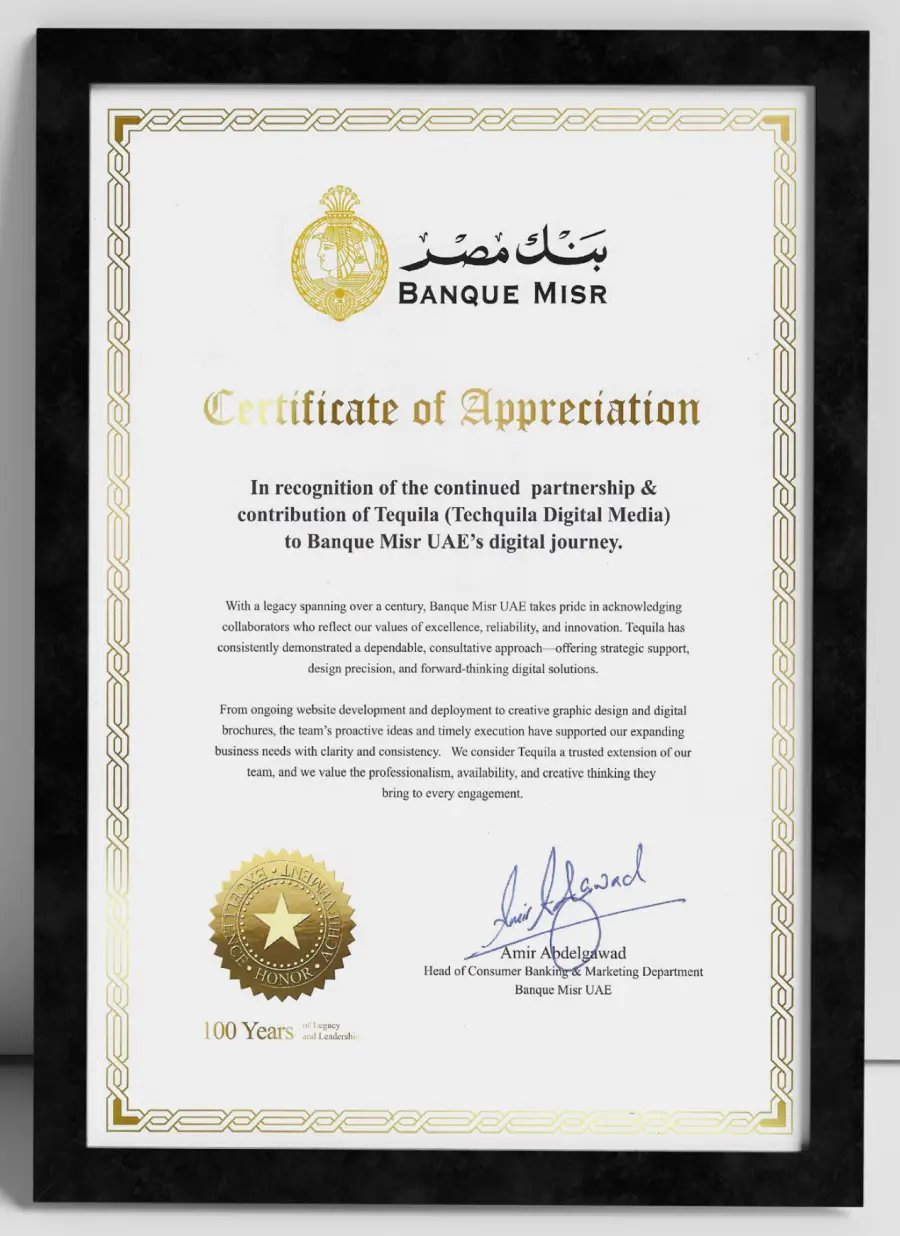

Partner, Supreme Steels

Marketing Manager, MediaPro International

CEO, Eurom LLC

Operations Manager, Fast Track Real Estate Reg Trustees


How We Build Business-Ready Applications
We develop custom web applications that streamline operations, manage data, and support complex workflows — securely and efficiently. Here's what we do for your business:
-
Step 1
Discovery & Requirement Mapping
We deep-dive into your business model, users, and operations to define features, logic, permissions, data flow, and future scalability requirements.
-
Step 2
Wireframing & User Flow Design
Clear wireframes and workflows map screen structure, navigation, user interactions, and backend dependencies — ensuring alignment before development begins.
-
Step 3
UI/UX Design
Interfaces are designed to be intuitive, brand-aligned, and practical — prioritising usability, clarity, and adoption over visual excess.
-
Step 4
Frontend & Backend Development
We build secure backend architecture, scalable databases, custom logic, and responsive frontends — engineered for performance and longevity.
-
Step 5
Testing & Deployment
Rigorous testing ensures functionality, security, performance, and edge cases are handled before launch.
-
Step 6
Post-Launch Support & Enhancements
As your business evolves, we support improvements, optimisations, and feature expansions — without rebuilding from scratch.
Who It’s Perfect For:
-
Businesses needing secure client or customer portals
-
Companies with complex workflows, data, or user roles
-
Teams outgrowing off-the-shelf software
-
Organisations seeking automation and operational efficiency
-
Founders building scalable digital products or platforms
The Business Impact of Well-Built Systems
Strong systems don’t just support growth — they enable it.
-
Improves Operational Efficiency
Custom workflows reduce manual effort, errors, and internal friction.
-
Enhances Decision-Making
Real-time data and dashboards provide clarity where it matters most.
-
Increases Adoption
Systems designed around real users are actually used — not bypassed.
-
Reduces Long-Term Costs
Purpose-built platforms replace multiple tools and recurring software expenses.
-
Scales with Your Business
Architecture designed for growth avoids rebuilds as needs evolve.
Why choose Tequila for web application design & dev projects?
-

Business-first thinking, not feature-driven development
-
In-house strategy, UX, and development teams
-

Fully custom-built solutions — never templates
-

Strong focus on usability and real-world adoption
-

Scalable, secure architecture designed for longevity
Your Web Application FAQ answered
Got questions about web app design and development? We’ve answered the most common ones right here for you.
All applications are custom-built. Frameworks are used only where they enhance performance or scalability — never as templates.
Yes. We regularly integrate with CRMs, ERPs, payment gateways, accounting tools, and third-party APIs.
Absolutely — especially for startups building SaaS platforms or operational tools that need to scale.
Yes. Security, access control, and data protection are built into the architecture from day one.
Yes. We support enhancements, optimisation, and scaling as your application grows.
A website presents information — pages, images, text, contact forms. A web application does something. It processes data, runs logic, handles user accounts, manages transactions, or automates a workflow. A company website that shows your services is a website. A client portal where customers log in, track orders, and download invoices is a web application. The line isn’t always sharp — many modern business sites have application features built in — but the distinction matters because the build process, cost, and technical requirements are fundamentally different.
Any business where the website needs to do more than inform. Common examples in the UAE market: real estate companies that need property search and filtering tools with map integration, service businesses that need booking or quoting systems, logistics companies that need tracking dashboards, training providers that need student portals, and any B2B operation where clients need to log in, view data, or manage their account. If your team is currently handling something manually that a system could handle — approvals, scheduling, calculations, reporting — that’s usually a web application conversation.
A website project typically follows a design-first process — wireframes, visual design, then development. A web application starts with functionality — what does it need to do, what data does it handle, what are the user roles, what logic runs behind the scenes. The UI/UX design work is heavier because you’re designing workflows and interactions, not just pages. Development takes longer because you’re building features, not laying out content. Testing is more rigorous because broken logic has real consequences — a page with a typo is embarrassing, an application that calculates a quote wrong costs money.
For simpler applications, yes — WordPress with custom plugins or Advanced Custom Fields can handle booking systems, membership areas, basic dashboards, and directory-style functionality. For anything that needs complex logic, heavy data processing, multiple user roles with different permissions, or real-time features, a custom-built application on a framework like Laravel or Node.js is the better choice. We assess this during the scoping phase — the goal is to use the simplest technology that reliably handles the requirements, not to over-engineer or under-build.
A focused application with a clear scope — a booking system, a client portal, a custom calculator — typically takes 8 to 16 weeks from scoping through launch. Larger platforms with multiple user types, integrations, and complex business logic can take 4 to 6 months or more. The single biggest factor in timeline isn’t the development — it’s how clearly the requirements are defined before building starts. Vague requirements lead to scope changes mid-build, which is where timelines and budgets blow out. We spend the first phase getting the scope locked before writing a line of code.
Significantly more than a website, because you’re paying for engineering, not just design and content. A simple application (booking tool, basic portal) might start around the same range as a custom website. A full platform build with multiple integrations, user roles, and complex logic is a larger investment. The honest answer is that it depends entirely on what the application needs to do — and the best way to get a real number is to scope the project first. We offer a discovery phase specifically for this, so you get a clear specification and cost before committing to the full build.
More than a website does. A website with outdated content still functions. A web application with an unpatched security vulnerability, a broken API integration, or a logic error can stop working entirely or produce wrong results. Ongoing maintenance for a web application includes everything a website needs — updates, backups, security — plus monitoring of application-specific functionality, API health checks, database optimisation, and bug fixes as edge cases surface in real-world use.
In most cases, yes. Common integrations we’ve built for UAE clients include CRM systems (HubSpot, Salesforce, Zoho), payment gateways (Stripe, Tap, Network International), ERP and accounting software, email marketing platforms, and third-party APIs for logistics, mapping, or government services. The feasibility depends on whether the existing system has an API or data export capability — we assess this during discovery and flag anything that would need a workaround before quoting the build.
Insights on Web Applications & Custom Platforms
When a website isn't enough — how web applications solve business problems that pages and templates can't, and what building one actually involves.
WEBSITE DEVELOPMENT

Progressive Web Apps: Transforming the Future of Web Development
PWAs get described as a replacement for native apps. They aren't, and treating them that way is how development budgets get spent on something nobody installs.
WEBSITE DEVELOPMENT

PHP Frameworks Are Revolutionizing Web Development in 2026
Updated on: 14 April 2026 PHP development has been the cornerstone of web development for many years, and one cannot stress enough about how the development community is taking advantage of its frameworks and developing applications quickly and efficiently. As we enter the new year, many PHP frameworks will still make waves in web development. Here […]
WEBSITE DESIGN

Design for Conversion: Turn Visitors into Loyal Customers
Attracting more visitors to your website is vital. However, it is merely the beginning. Once you have new people on your website, you must engage their interest, motivate them to explore your website and convert them into customers. This conversion is necessary as it will increase sales for the new customers. In addition, it will […]

Branding & Web Design Enquiries
working with brands across the UAE and globally.