
Generative AI in Branding: What’s Actually Useful for Dubai Businesses



 Save for later
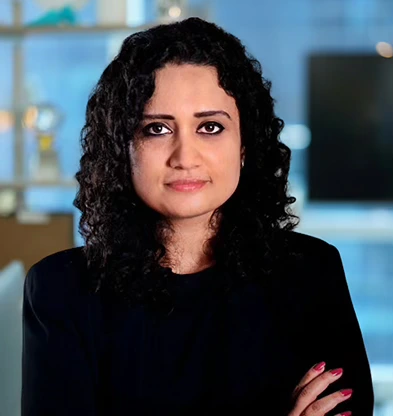
By Nam, Head of Strategy
Published: 24 Jul 2024 | Last Updated: 23 Sep 2026
Two years ago, generative AI in branding meant a logo generator and a lot of hype. That’s no longer the case. The tools have gotten better, adoption has climbed sharply across the UAE, and the honest question for most business owners isn’t “should we use AI in our branding” — it’s “where does it actually help, and where does it just produce generic output faster.” This is our attempt at a straight answer.
Why This Question Matters More in the UAE Than Almost Anywhere Else
The UAE’s working-age population reached 70.1% generative AI adoption in Q1 2026, up from 64% at the end of 2025, according to Microsoft’s AI Diffusion Report — the highest rate of any country measured. That’s not a niche behaviour. It means the businesses you’re competing with for attention, and quite possibly your own customers, are already using AI tools daily, which changes what “on-brand” content needs to look like to stand out. The UAE’s AI market itself was valued at USD 5.5 billion in 2025, with the generative AI segment growing faster than any other technology category and expected to roughly triple its market share by 2035. Branding work is a small piece of that, but it’s not immune to it.
That context matters for how we think about branding strategy in Dubai right now. A tool that saves time is useful. A tool that produces content indistinguishable from every other brand using the same tool is a liability, not an advantage.
Where Generative AI Genuinely Helps
The clearest win is speed on the first draft, not the final decision. A few areas where this plays out in real branding work:
Generating logo and visual concept variations quickly, so more directions get explored before anyone commits to one. Producing first-pass copy variants for ad sets and social captions that a strategist then edits rather than writes from scratch. Analysing customer behaviour data to segment audiences more precisely than manual review allows, which feeds into sharper social media targeting. Speeding up asset production for campaigns that need dozens of sized variations of the same core creative.
None of this replaces the judgment calls that make a brand actually work — positioning, tone, what to say no to. It compresses the mechanical parts of production so more time goes into those calls instead.
The Tools Dubai Brands Are Actually Using in 2026
The tool landscape has shifted since generative AI first entered mainstream branding conversations. Canva remains a common entry point for small teams, with AI-assisted design suggestions built into its template library. Adobe retired Adobe Spark and folded its capabilities into Adobe Firefly, now integrated across Photoshop, Illustrator, and Adobe Express — it’s the more capable option for teams that need commercially licensed, brand-consistent output at scale. Tailor Brands and Looka continue to serve founders who need a fast starting logo and basic brand kit before they’re ready to invest in full logo design and branding work.
The pattern across all of them is the same: they’re fastest at producing a first draft, and weakest at producing something distinctive. A logo generator trained on thousands of existing logos will, by design, tend toward the visual middle of what already exists. That’s the opposite of what differentiation requires.
Where the Risks Actually Are
Three problems come up consistently, and none of them are hypothetical.
Generic output is the biggest one. AI models are trained to produce statistically likely results, which is precisely why unedited AI output tends to look like everyone else’s unedited AI output. If your competitors are using the same three tools you are, unedited AI content stops being a differentiator the moment it becomes the default.
Data privacy and bias are the second. Tools that process customer data to personalise content need that data handled properly, and models trained on incomplete or skewed datasets will reproduce that skew in their output — a real concern for brands targeting specific cultural or demographic segments in a market as diverse as the UAE’s.
Cost of getting it wrong is the third, and the one people underestimate. A generic AI-generated brand identity is cheap to produce and expensive to walk back once it’s live on packaging, signage, and a year of marketing collateral. This is where rebranding requests often start — a business realises its AI-assisted quick start doesn’t hold up as the company scales.
What This Means If You’re Choosing a Branding Agency in Dubai
The practical takeaway isn’t “avoid AI” or “use AI for everything.” It’s that AI is now a production tool inside professional branding work, not a substitute for it. A good agency uses it to move faster on drafts, variations, and data analysis, while keeping strategy, positioning, and final creative judgment as human decisions. If a branding agency’s services page or pitch doesn’t distinguish between the two, that’s worth asking about directly.
This also connects to a broader shift worth understanding: AI tools aren’t just changing how brand content gets made, they’re changing how customers find brands in the first place, as more searches get answered directly by AI assistants rather than a list of links. We’ve covered what that means for UAE businesses in more depth separately, but the short version is that visible, well-structured brand content matters more now, not less.
If you’re weighing whether your current brand identity can support the pace this market is moving at, that’s a brand strategy conversation before it’s a tools conversation.
Key Takeaways
- UAE generative AI adoption hit 70.1% of the working-age population in Q1 2026, the highest of any country tracked — up from 64% just one quarter earlier
- Generative AI speeds up production (draft variations, campaign asset scaling, audience segmentation) but doesn’t replace strategic positioning or creative judgment
- Adobe Spark no longer exists — its capabilities moved into Adobe Firefly, now integrated across Photoshop, Illustrator, and Adobe Express
- Unedited AI output tends toward generic, average results by design, since the underlying models are trained to produce statistically likely content
- A generic AI-assisted brand identity is cheap to launch and expensive to fix later through a full rebrand
- The UAE’s AI market was valued at USD 5.5 billion in 2025, with the generative AI segment growing faster than any other AI technology category
Frequently Asked Questions
No — it changes what agencies spend time on. Production tasks like draft variations and data analysis get faster; strategy, positioning, and creative judgment remain human work, and they’re the parts that actually determine whether a brand succeeds.
Canva and Adobe Firefly (which absorbed Adobe Spark) are the most common for design production, while Tailor Brands and Looka are typically used by founders needing a fast initial logo and brand kit before investing in full agency work.
Generally no. Unedited AI output tends toward generic, statistically average results, since that’s what the underlying models are trained to produce. It’s a strong starting point for drafts, not a finished deliverable.
It can reduce time spent on production tasks, but a generic AI-assisted identity that needs correcting later — through a full rebrand — often costs more than getting strategy and differentiation right from the start.
Sharply. UAE working-age population adoption of generative AI reached 70.1% in Q1 2026, up from 64% just one quarter earlier, according to Microsoft’s AI Diffusion Report — the highest adoption rate of any country tracked.
Yes. With UAE working-age adoption of generative AI at 70.1% as of Q1 2026, it’s now a standard part of production workflows at most branding and marketing agencies in Dubai — used for draft variations, campaign asset scaling, and audience data analysis rather than final creative decisions.
AI-assisted branding uses generative tools to speed up production — drafts, variations, data analysis — while strategists make the final calls on positioning and creative direction. AI-generated branding skips that step and publishes the tool’s raw output, which is why it tends to look generic and interchangeable with competitors using the same tools.
The UAE’s national AI strategy and its policy of moving half of government services to autonomous AI within two years have driven the country’s AI market to USD 5.5 billion in 2025, with generative AI the fastest-growing segment. For branding and marketing, that translates into faster customer expectations around personalisation and AI-powered engagement, not a direct government mandate on how brands operate.
If you’re rethinking how AI fits into your brand’s production process or whether your current identity is built to last past the next tool cycle, get in touch or email us at info@tequila.ae.
Looking for
Branding Services
?
Call us at +971 50 937 2493
or email us at info@tequila.ae
About the Author
Nam is the research-and-strategy mind behind Tequila's most complex brand work. She gets under the skin of a category — its audiences, competitors, and tensions — and turns what she finds into positioning that actually moves the needle. Designers and clients both lean on her for the same reason: clarity. She makes the hard problems solvable.



Branding & Web Design Enquiries
working with brands across the UAE and globally.