
Using AI for Your Brand: The Risks Dubai Businesses Often Miss


 Save for later
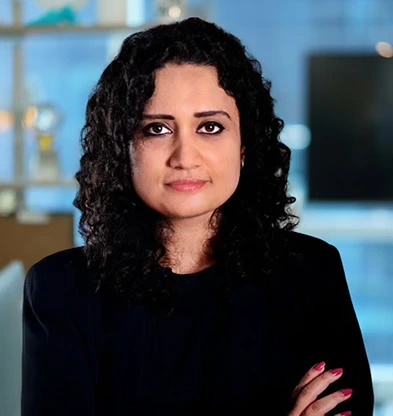
By Nam, Head of Strategy
Published: 17 Sep 2024 | Last Updated: 22 Sep 2026
AI can now generate logos, brand names, taglines and imagery in seconds. That’s useful for exploring ideas, but risky as a final brand. The main issues are ownership, trademark conflicts, lack of distinctiveness, confidentiality and cultural accuracy. Businesses in Dubai can use AI safely in branding by treating it as a starting point, keeping sensitive information out of public tools, and making sure people design, check and own the final identity.
Key Takeaways
- Purely AI-generated designs may not be protected by copyright, which weakens your ownership of your own brand.
- AI logos can closely resemble existing marks, creating trademark conflicts later.
- AI favours what’s typical, so AI-made brands often look like their competitors.
- Confidential business information shouldn’t be entered into public AI tools.
- AI still struggles with Arabic script and cultural context, which matters in the UAE.
Where AI Helps in Branding
Used carefully, AI is a useful assistant in the early stages of a branding project:
- Research: summarising competitor positioning, customer reviews and market language.
- Exploration: generating many naming ideas or mood-board directions quickly, as raw material for a team to refine.
- Drafting: first versions of taglines, brand story outlines and messaging options.
- Mockups: showing how an identity could look on signage, packaging or social media before final production.
The value is speed at the start. The risks appear when AI output becomes the finished brand.
Risk 1: You May Not Fully Own an AI-Generated Brand
In many jurisdictions, copyright protects work created by people. The US Copyright Office, for example, has refused to register work produced without meaningful human authorship. How this applies to AI-generated designs is still developing internationally, including in the UAE.
For a business, the practical risk is simple: if your logo was generated almost entirely by AI, your ability to stop others from copying it may be weaker than you expect. Your brand identity is one of your most valuable assets, so ownership shouldn’t be uncertain.
Risk 2: Trademark Conflicts
AI tools learn from millions of existing images, and they can produce logos that closely resemble marks already in use. You may not notice the similarity, but a trademark examiner or a competitor’s lawyer might.
Before any logo is used, it should be checked against existing marks and designed to be genuinely distinctive. That matters when you register a trademark in the UAE, and even more if you expand across the GCC. Rebranding after a conflict costs far more than getting it right the first time.
Risk 3: A Brand That Looks Like Everyone Else
AI works by predicting what’s most typical. That’s why AI-generated logos often share the same shapes, gradients and fonts, and AI-written taglines often sound alike.
In Dubai, where customers compare dozens of options in the same category, distinctiveness is the whole point of a brand. A logo that could belong to any company in your sector isn’t doing its job. Brand strategy that defines what makes you different has to come before any design, AI-assisted or not.
Risk 4: Confidentiality and Client Data
Branding projects involve sensitive information: expansion plans, new product launches, pricing, customer insights. Entering that into public AI tools may expose it, depending on the tool’s terms and settings.
Businesses in the UAE also have obligations under the country’s personal data protection law when handling customer information. Any agency working on your brand should be clear about which AI tools it uses and what information goes into them.
Risk 5: Arabic and Cultural Accuracy
AI image tools still frequently misrender Arabic script, producing letterforms that look plausible but are wrong or meaningless. AI-written Arabic copy often reads as translated rather than native.
For brands in the UAE, these mistakes aren’t minor. Incorrect Arabic on a logo, packaging or signage damages credibility immediately. Cultural context matters too: imagery, colours and messaging need to suit the Gulf audience, and AI can’t reliably judge that.
Risk 6: Bias in AI-Generated Imagery
AI tools reflect the data they were trained on, and that data is not evenly representative. Ask an AI tool for images of “business leaders” or “families” and the results often lean towards a narrow range of appearances, styles and settings.
Dubai’s audience is one of the most diverse in the world: Emirati, Arab, South Asian, European, African and East Asian customers, often for the same brand. Imagery that consistently leaves groups out, or represents them through stereotypes, quietly tells part of your market that the brand isn’t for them. Every AI-generated visual should be reviewed for who it shows, who it leaves out, and whether it reflects the customers you actually serve.
Keeping Your Brand Consistent When Your Team Uses AI
Even with a strong identity in place, AI creates a new risk after launch. Teams across marketing, sales and social media can now produce content faster than ever, and each tool pulls it in a slightly different direction. Over months, the tone, visuals and messaging drift away from the brand.
The fix is governance, not avoidance:
- Add AI rules to your brand guidelines: what AI can be used for, which tools are approved, and what always needs human review.
- Give AI tools your brand context: tone of voice, key messages and terms to avoid, so outputs start closer to the brand.
- Review regularly: check a sample of recent content every quarter against your guidelines, and correct drift early.
A brand is built by consistency. AI makes it easier to produce more, which makes consistency harder to keep.
How We Use AI in Branding at Tequila
We use AI where it adds speed without adding risk: research, early exploration and drafting. Every final identity is designed by our team, checked for distinctiveness, and developed properly in both Arabic and English. We keep confidential client information out of public AI tools.
The result is a brand that benefits from AI’s speed at the start, and is fully considered, original and owned at the finish. That’s the standard behind our logo design and brand naming work.
Questions to Ask Before Using AI for Your Brand
- Was the final logo designed by a person, or generated by AI?
- Has it been checked against existing trademarks?
- Who owns the rights to every element of the identity?
- Which AI tools were used, and what information was entered into them?
- Who checked the Arabic?
If a designer or agency can’t answer these clearly, the brand may carry risks you’ll only discover later.
For how AI is changing website projects specifically, read our guide to generative AI in web design.
The Bottom Line
AI is changing how brands are built, but not what makes them work. A strong brand is still original, clearly owned, instantly recognisable and right for the people it serves. In Dubai’s crowded and multicultural market, those qualities matter more, not less.
Use AI for what it does well: faster research, broader exploration and quicker drafts. Keep the decisions that define your brand with people who understand your business, your market and your audience in both Arabic and English. The businesses that get this balance right will build brands faster without building them weaker.
Frequently Asked Questions
You can apply to register it, but there are two risks. The logo may resemble an existing mark, leading to rejection or a dispute, and a purely AI-generated design may have weaker copyright protection. A logo created or substantially shaped by a designer, and checked against existing marks, is far safer.
It depends on the tool’s terms and on local law, and the law is still developing. Many jurisdictions only protect work with meaningful human authorship. For a business asset as important as your brand identity, it’s worth ensuring a person created the final design and that rights are clearly transferred to you.
It’s useful for generating ideas, but not for choosing a name. AI suggestions may already be in use, trademarked, or unsuitable in Arabic. Any name should be checked for availability, trademark conflicts, domain options and meaning in both languages before you commit.
Many do, mostly for research, early concepts and drafting. The difference is how far it goes. Ask any agency where AI is used, who designs the final identity, and how they protect your confidential information.
Not reliably yet. AI image tools often misrender Arabic letterforms, producing text that looks convincing but is incorrect. Arabic logos and typography should be designed by people who read Arabic and understand calligraphic and typographic conventions.
For mockups and exploration, yes. For core brand assets, be cautious: check the tool’s licence for commercial use, and consider that AI imagery tends to look generic. Original photography or custom illustration gives a more distinctive and clearly owned result.
Building a brand that’s truly yours? Talk to our branding team about an identity designed for your business, in Arabic and English.
Looking for
Website Design Services
?
Call us at +971 50 937 2493
or email us at info@tequila.ae
About the Author
Nam is the research-and-strategy mind behind Tequila's most complex brand work. She gets under the skin of a category — its audiences, competitors, and tensions — and turns what she finds into positioning that actually moves the needle. Designers and clients both lean on her for the same reason: clarity. She makes the hard problems solvable.


Branding & Web Design Enquiries
working with brands across the UAE and globally.