
What is Branding And Why Is It Very Important For Your Business



 Save for later
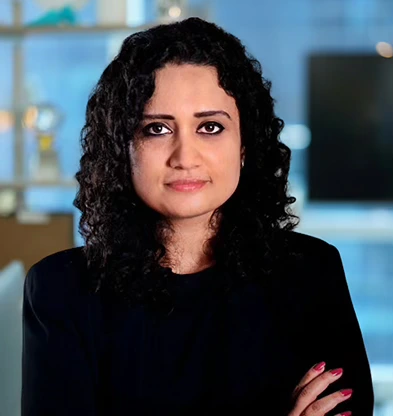
By Nam, Head of Strategy
Published: 17 Jul 2023 | Last Updated: 04 Sep 2026
Branding is the deliberate work of shaping what people believe about your business before they’ve dealt with you.
That’s the short answer. It isn’t your logo, and it isn’t marketing. It’s the set of decisions that determine what someone assumes about your quality, your price, your reliability, and whether you’re for them — assumptions they form in seconds, from incomplete information, usually without meeting anyone.
Kotler and Keller, whose textbook most marketing degrees still run on, define it as endowing products and services with the power of a brand. Useful, but circular for anyone who hasn’t already got the concept. Here’s the practical version.
What branding actually consists of
Branding operates at three levels, and most confusion comes from mistaking the third for the whole thing.
Strategy is the foundation: who you’re for, what you do better or differently, what you stand for, and what you refuse to do. This is where positioning lives. It’s mostly writing and argument rather than design, and it’s the part businesses skip most often.
Verbal identity is how the strategy gets said: your name, your tagline if you have one, the vocabulary you use, the tone you take. Whether you sound like a consultancy, a workshop, or a neighbour.
Visual identity is how it gets seen: logo, colour, typography, photography, layout system, and everything downstream of those. This is what most people mean when they say branding, and it’s the last thing that should be decided rather than the first.
The reason the order matters: a visual identity built without strategy is decoration. It can be beautiful and still tell people the wrong thing about you, because nobody decided what the right thing was.
What branding is not
A logo. A logo is an identifier. It carries meaning that the rest of your brand has built; it doesn’t create meaning on its own. A new logo on an unchanged business changes very little.
Marketing. Marketing is what you say to reach people. Branding is what they think when they hear it. Marketing spend against a weak brand costs more per result, because every message has to do the work that recognition would otherwise do for free.
Your product. Two businesses can sell identical services and command different prices. The gap is brand.
Something only big companies need. Small businesses have brands whether they manage them or not. The choice is between a brand you decided and one that accumulated.
Does branding actually affect revenue?
Yes, though the number you’ll see quoted most is wrong, and it’s worth being precise about this.
Agency sites routinely cite “23% revenue increase from consistent branding.” That figure is a garbled version of research by Lucidpress, which surveyed over 200 organisations in 2016 and more than 400 brand management experts in 2019. The actual finding is a range: average revenue increase attributed to consistent brand presentation runs between 10 and 20%, with the upper bound reaching 33%.
A separate NielsenIQ analysis found companies whose brand strategy is consistent across teams are 3.1 times more likely to be market share leaders.
The mechanism isn’t mysterious. Consistent brands need fewer touchpoints to convert, sustain higher prices, and get more repeat business from customers they already have. Interbrand’s 2025 report put the combined value of the top 100 global brands at $4.4 trillion, up $150 billion in a single year, which is a reminder that brand appears on balance sheets as well as in marketing decks.
Why this matters more in Dubai than in most markets
Dubai’s competitive density is the practical argument for branding here, and it’s measurable.
The Dubai Chamber of Commerce recorded 2,709 new member companies joining in March 2026 alone. Real estate, renting, and business services accounted for 41.2% of them, followed by trading and services at 29.5% and construction at 15%.
Read that as a competitive statement rather than an economic one. If you’re in professional services or real estate in Dubai, several hundred new competitors registered in your category in the last month. Not all will survive, but all of them will compete for attention while they try.
In a market that dense, being good is not a differentiator, because your competitors are also good and nobody can tell from outside. What differentiates is being legible: clear about who you’re for and what you’re better at, consistently, everywhere someone might encounter you.
Two further local factors:
Buyers are frequently new here. Dubai’s business population turns over constantly. Your prospects often have no local network to ask, no prior relationship, and no context. They’re forming judgements from your website, your profile, and whatever a search returns. That’s an unusually pure test of brand.
Bilingual coherence is part of the brand. An English brand with a machine-translated Arabic afterthought reads as exactly that. Consistency across both languages is a brand decision before it’s a translation task.
The part that’s changed recently
Something new has been added to the commercial case, and it’s technical.
AI systems treat consistency across independent sources as a reliability signal. When your website, your directory listings, your LinkedIn, and any press coverage describe your business differently, an AI assistant asked about your category has conflicting inputs and will hedge or pick someone clearer.
This is a genuinely new incentive for brand discipline. Inconsistency used to cost you a bit of recognition. Now it costs you accuracy in the answers that increasingly mediate how businesses get found, which we covered in more depth in answer engine optimisation.
Practically: the description of your business should be functionally identical everywhere it appears. Same positioning, same category language, same core facts. That’s a brand governance job, not a marketing one.
How to tell whether you need branding work
Not every business needs a rebrand. Some signals that you probably do:
- Two people inside your company describe what you do differently
- You compete primarily on price and can’t articulate why you’d cost more
- Your materials look like they came from different companies
- New customers are consistently surprised by something about you, good or bad
- You’ve changed direction since your identity was created
- Your Arabic and English presences feel like different businesses
And some signals you don’t:
- You dislike your logo but customers understand you perfectly
- Sales are slow for reasons you can trace to a specific channel
- A competitor launched something that looks nice
The second list matters. Rebranding to solve a sales problem that isn’t a positioning problem is expensive and doesn’t work.
Where branding and the website meet
The website is usually the largest single expression of a brand, which is why the sequence matters. A site built before positioning is settled becomes a rebuild rather than a launch.
This is also why we keep UI/UX design inside our brand practice rather than downstream of it. The people who set the type scale and colour logic are the same people designing the screens those rules govern, which is the difference between a website that carries a brand and one that references it.
If you’re weighing up how to sequence this, we’ve written on whether to use one agency or two, and the fuller picture of our branding work sits alongside the portfolio.
Frequently asked questions
Branding is the work of deciding and controlling what people believe about your business before they deal with you. It covers strategy (who you’re for and what you do differently), verbal identity (name, language, tone), and visual identity (logo, colour, typography, imagery). The visual layer is what most people picture, but it’s the last part to be decided rather than the first.
Branding defines what your business means. Marketing communicates it to reach people. Branding is the foundation that makes marketing more efficient, because a recognised brand needs fewer touchpoints to convert. Marketing spend against a weak brand costs more per result.
No. A logo identifies a brand; it doesn’t constitute one. It carries meaning that strategy, behaviour, and consistency have built. Changing a logo without changing anything underneath changes very little about how a business is perceived.
Research supports a real effect. Lucidpress’s primary research across two survey rounds found consistent brand presentation associated with average revenue increases of 10 to 20%, with the upper bound at 33%. The widely quoted “23%” figure is a misreading of that research. NielsenIQ analysis separately found consistent brands are 3.1 times more likely to lead market share.
Every business has a brand whether or not it manages one. The question is whether it was decided or accumulated. Small businesses in competitive markets benefit disproportionately, because brand is often the only thing separating them from equally capable competitors a buyer can’t distinguish from outside.
Typically six to twelve weeks for a small to mid-sized business, depending on how much strategy work is required and how many people need to approve decisions. Projects run long most often because positioning is contested internally, not because design takes time.
Branding. A website is the largest single expression of a brand, and building one before positioning is settled means rebuilding it once positioning arrives. Where a brand already exists and works, the site can be built directly to it.
Trying to work out whether your brand is the problem or something else is? Talk to us. We’ll tell you if it isn’t.
Looking for
Branding Services
?
Call us at +971 50 937 2493
or email us at info@tequila.ae
About the Author
Nam is the research-and-strategy mind behind Tequila's most complex brand work. She gets under the skin of a category — its audiences, competitors, and tensions — and turns what she finds into positioning that actually moves the needle. Designers and clients both lean on her for the same reason: clarity. She makes the hard problems solvable.



Branding & Web Design Enquiries
working with brands across the UAE and globally.