
The Branding Process: How an Idea Becomes a Brand



 Save for later
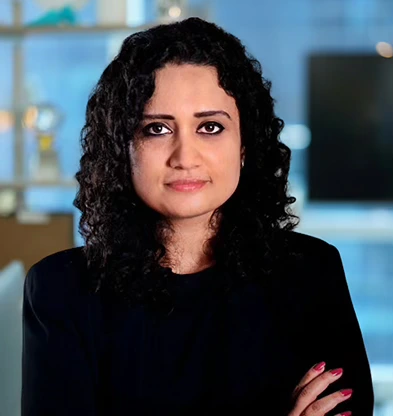
By Nam, Head of Strategy
Published: 16 Dec 2023 | Last Updated: 07 Sep 2026
Branding projects fail in predictable places, and almost none of them are the design stage.
They fail because positioning was never agreed, because five people had approval rights and disagreed in month three, because the name cleared trademark but not Arabic, or because the identity launched into a business that had already changed direction.
This is the process as it actually runs, stage by stage, with what you’re responsible for at each point. We run branding projects this way, and the ones that finish cleanly are almost always the ones where the client knew what was coming.
Stage 1: Discovery and research
Before anything is decided, the agency needs to understand the business, the category, and the customer. Interviews across your team, competitor analysis, and whatever customer data exists.
The competitor mapping matters more than clients expect. Most businesses describe their competitive set the way their industry classifies it. Buyers see something different, and it’s the buyer’s version that determines positioning.
This is also where internal disagreement surfaces. If your founder and your sales lead describe the business differently, that gap is the single most useful input in the project.
Your job: name one decision-maker and make your team genuinely available. Every additional approver adds coordination time on top of review time.
Stage 2: Positioning
The output is a written argument, not a visual: who you’re for, what you do differently, what you stand for, what you decline.
This stage is uncomfortable because it involves saying no to audiences and claims. A positioning statement that excludes nobody has decided nothing.
The commercial case for getting it right is measurable. Lucidpress research across two survey rounds found consistent brand presentation associated with average revenue increases of 10 to 20%, reaching 33% at the upper bound. NielsenIQ analysis found companies with brand strategy consistent across teams are 3.1 times more likely to lead market share. Consistency starts here, because you cannot be consistent about something undefined.
Your job: actually decide. Positioning that gets softened to keep everyone comfortable produces an identity that says nothing.
Stage 3: Naming, where applicable
Only relevant for new businesses, products, or sub-brands, but when it applies it sits before everything visual.
In the UAE, brand naming carries requirements most markets don’t. The name has to work in English and Arabic, avoid unintended readings across the language communities here, clear trademark in the jurisdictions you operate in, and satisfy trade licence naming rules. Discovering an Arabic problem after the licence is issued is expensive.
Your job: supply rejection criteria before the presentation, not after. Names die in review for unstated reasons, and each round costs two weeks.
Stage 4: Verbal identity
How the positioning gets said: tone, vocabulary, the way you describe what you do, and the phrases you’ll use repeatedly.
This stage is routinely skipped, which is why so many businesses have a coherent look and incoherent language. If your website, your proposals, and your LinkedIn describe the business in three different registers, verbal identity is the missing piece.
There’s a newer reason it matters. AI systems weight consistency across independent sources when deciding what to trust about a business. Inconsistent descriptions produce hedged or inaccurate answers, which we’ve covered in answer engine optimisation.
Stage 5: Visual identity
The part everyone pictures: logo, colour, typography, imagery direction, layout logic.
Good agencies present a small number of considered directions rather than many variations. Ten options usually means nobody made an argument.
Two things determine whether this stage goes well. First, whether the positioning is genuinely settled, because visual work is where unresolved strategy resurfaces as taste disagreement. Second, whether the agency understands where the mark actually has to work: signage, app icon, embroidery, vehicle livery, Arabic lockup. Logo and identity designed for a presentation slide breaks in application.
Your job: consolidate feedback into one response per round, and comment on fit rather than preference. “I don’t like green” is not usable input. “Green reads as clinical in our category” is.
Stage 6: Brand guidelines
The system that lets other people apply the brand correctly without asking.
At minimum: logo usage and clearspace, colour values across print and digital, typographic hierarchy, imagery direction, layout logic, and tone of voice. A usable set also covers what to do in situations it doesn’t explicitly address.
The test: can someone who has never met the agency produce on-brand material on their first attempt? If not, you have a folder of files rather than a brand.
This is the deliverable that determines whether you can move day-to-day production to a cheaper resource later, which we’ve covered in agency, freelancer, or in-house.
Stage 7: Application
The brand meets reality: website, company profile, social templates, signage, stationery, collateral.
This is where gaps in the system show up, and where the sequence matters most. A website built before positioning is settled becomes a rebuild rather than a launch. We keep UI/UX inside the brand practice for this reason: the people who set the type scale should be the people designing the screens it governs.
Your job: content. Copy, photography, and product information sit directly on the critical path, and content delays are the primary cause in roughly 60% of projects that overrun. Start before the agency asks.
Stage 8: Launch and governance
Internal rollout before external. Your own team needs to understand the positioning before customers encounter it, because staff describing the business the old way undoes the work.
Then governance: someone owns the standard, reviews output periodically, and catches drift before it compounds. Drift is gradual and invisible from inside.
Your job: decide who owns the brand internally. If the answer is nobody, arrange external review instead.
Realistic timelines
| Scope | Typical duration |
|---|---|
| Identity refresh, existing positioning | 4–6 weeks |
| Full brand, single decision-maker | 8–12 weeks |
| Full brand including naming | 12–16 weeks |
| Rebrand with multiple stakeholders | 16–24 weeks |
| Brand plus website as one engagement | 16–24 weeks |
Projects run long for two reasons, and neither is design speed. Positioning stays contested internally, or approvals fragment across too many people. Both are solvable before the project starts.
Local note: plan around Ramadan, Eid, and the summer period. A project starting in May with a September deadline will hit weeks where half your approvers are out of the country.
Why this matters more in Dubai
Competitive density is the practical argument. Dubai Chamber of Commerce recorded 2,709 new member companies joining in March 2026 alone, with real estate, renting and business services accounting for 41.2% of them.
Read that as a competitive statement. Several hundred new competitors registered in your category last month. In a market that dense, being good isn’t a differentiator, because your competitors are also good and buyers can’t tell from outside. What differentiates is being legible.
The second factor: your buyers are frequently new here, with no local network to consult and no prior context. They form judgements from your website, your profile, and whatever a search returns. That’s an unusually pure test of brand.
If you’re weighing whether to run brand and website together, we’ve set out the trade-offs in branding agency vs web design agency, and the full service range sits in branding agency services.
Frequently asked questions
Discovery and research, positioning, naming where applicable, verbal identity, visual identity, brand guidelines, application across touchpoints, and launch with ongoing governance. Positioning sits before anything visual, and skipping it is the most common reason branding projects produce work that looks good and changes nothing.
Four to six weeks for an identity refresh where positioning is settled, eight to twelve weeks for a full brand with a single decision-maker, and sixteen to twenty-four weeks for a rebrand involving multiple stakeholders or a combined brand and website engagement. Naming adds two to four weeks for linguistic and trademark checks.
A single decision-maker, access to your team for interviews, any customer research or win-loss data you hold, consolidated feedback within agreed turnarounds, and content for the application stage. Content readiness is the most common cause of delay.
Rarely because of design. Most commonly because positioning was never genuinely agreed, because approval was spread across too many people who disagreed late, or because the business changed direction mid-project. All three are visible before the design stage if anyone looks.
You can, and the result is decoration. Visual identity built without positioning has nothing to express, which usually surfaces as taste disagreements in design review that are actually unresolved strategy arguments. If positioning is already documented and current, you don’t need to redo it.
Internal rollout first, so your team describes the business consistently, then ongoing governance: someone owns the standard and reviews output periodically. Brands drift gradually and invisibly, and the drift is only obvious to someone looking from outside.
Working out where you are in this process, or whether you need to start it at all? Talk to us. We’ll tell you if the answer is a smaller piece of work.
Looking for
Branding Services
?
Call us at +971 50 937 2493
or email us at info@tequila.ae
About the Author
Nam is the research-and-strategy mind behind Tequila's most complex brand work. She gets under the skin of a category — its audiences, competitors, and tensions — and turns what she finds into positioning that actually moves the needle. Designers and clients both lean on her for the same reason: clarity. She makes the hard problems solvable.


Branding & Web Design Enquiries
working with brands across the UAE and globally.